
Concept
Forge
Making decades of capability look like the future.
Forge is a fictional industrial manufacturer: precision assemblies, harsh-environment components, a plant that has been iterating for decades. This study is a scenario. It asks how to modernize a corporate website without making a 70-year company look like a startup that just discovered bevels.
Redesign strategy · Content migration · Modular CMS · Lead generation
The scenario
Forge makes parts that fail last. The work is not glamorous and should not be dressed as such. What it can be is exact, monumental, and proud of its constraints.
The existing-site fiction: a 2014 corporate template, a product tree that mirrors the org chart, and six ways to spell the same alloy.
The challenge
Industrial sites often confuse completeness with usefulness. Everything is posted; nothing is findable. SEO equity lives on URLs nobody wants to break. Engineering wants datasheets. Marketing wants a hero video of sparks. Legal wants PDFs.
A visual-only redesign would leave the information architecture — the actual business problem — untouched.
Audience and objective
An engineer is trying to answer: can they hold this spec, in this environment, with this certification, on this timeline. A procurement lead is trying to answer: are they real, are they reachable, will they still exist.
The site’s primary conversion is a qualified conversation, with enough context that Forge does not spend the first meeting reconstructing the inquiry.
Strategic reframe
Structure the site around jobs, not departments: Capabilities, Environments, Spec library, Proof (case-shaped project stories without fake metrics), Careers, Talk to engineering.
The brand can be bold without becoming a lifestyle industrial. Color is used like shop floor marking: acid signal for wayfinding and emphasis, steel and paper for reading.
Content architecture and migration
Migration is designed as a product. Every URL is inventoried. Datasheets become objects with relations (material, certification, environment) rather than files marooned in a folder. Redirects are a deliverable, not a launch-week scramble.
The CMS is modular: capability, environment, spec, facility, story. Editors can assemble a market page without inventing a new layout. Multilingual readiness is structural — string length, date formats, and hreflang — even if the first ship is English.
Art direction
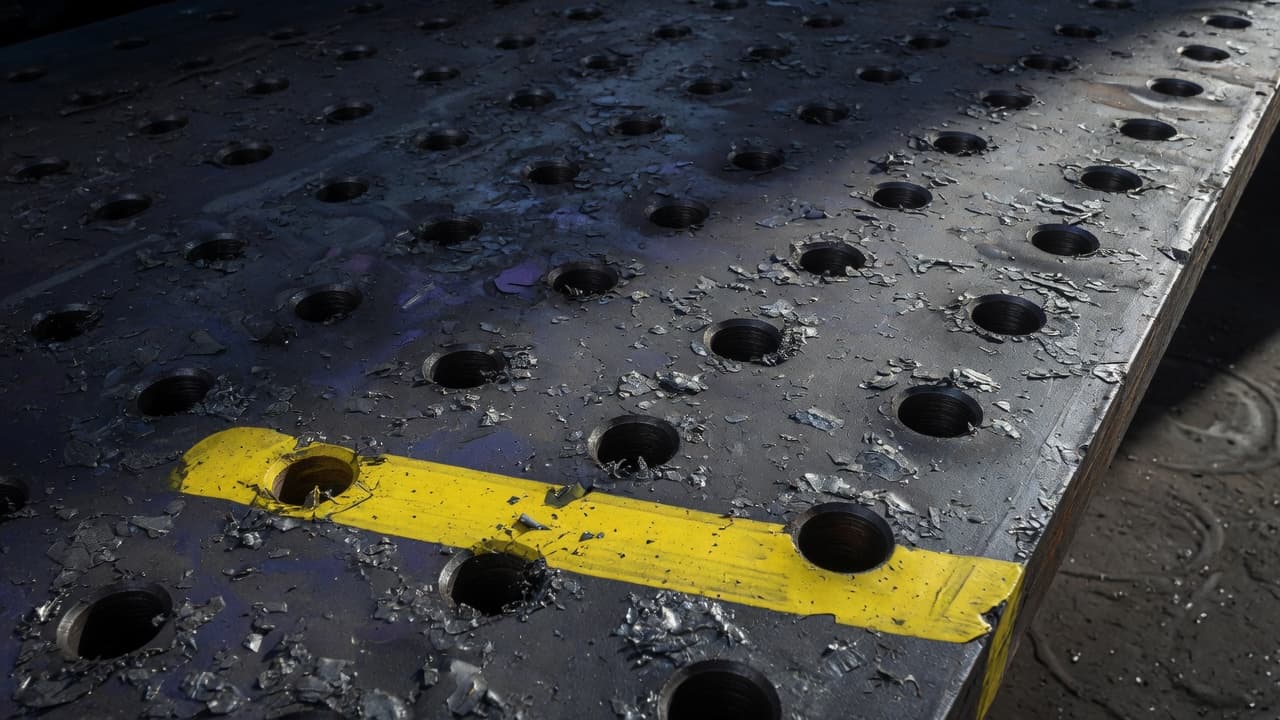
Monumental grid, engineered motion, macro materials: mill scale, anodized edges, graphite. Photography is close and honest. Type is strong and disciplined. The acid accent is a marking color, used sparingly so it remains a signal.
Kinetic specifications — numbers that resolve into place — are used only where a value is actually the point. They never count up to a vanity metric.
Interaction and motion
Motion has weight. Grids lock. Specs snap. Page transitions are short. Nothing is pinned long enough to feel like the plant tour you cannot skip.
The inquiry path is a professional conversation: what environment, what constraint, what timing — not a newsletter popup.
Design-system excerpt
A dense industrial system: data tables that do not die on mobile, file objects with accessible download names, certification badges that are text, not color alone. Tokens distinguish shop (dark, marking) from office (paper, long reading).
Responsive treatment
Engineers really do open datasheets on phones, in plants with bad networks. Tables collapse into definition lists. PDFs are labeled with size. The inquiry CTA is available without covering the spec the visitor came to check.
Accessibility, SEO, and performance
Acid green on black is tested, not assumed. Focus states are as loud as shop markings. Documents have real titles. The newsroom is pruned; thin press pages are redirected rather than redesigned into more thin pages.
Performance is a plant-floor requirement: the site must work on a midrange Android on a tired connection. Hero video is optional and never the LCP candidate.
What this study demonstrates
This study demonstrates a major redesign as a content, CMS, accessibility, and trust problem — not a fresh coat of charcoal. It is a design hypothesis for how industrial capability can look contemporary without abandoning seriousness. No manufacturer commissioned it, and no lead-gen metrics are claimed.